How to maintain an unbroken temperature-controlled supply chain when transporting perishable food, pharmaceuticals, and vaccines. Equipment standards, real-time monitoring, and compliance requirements.
Cold Chain Logistics in Europe: 2026 Standards and Technology
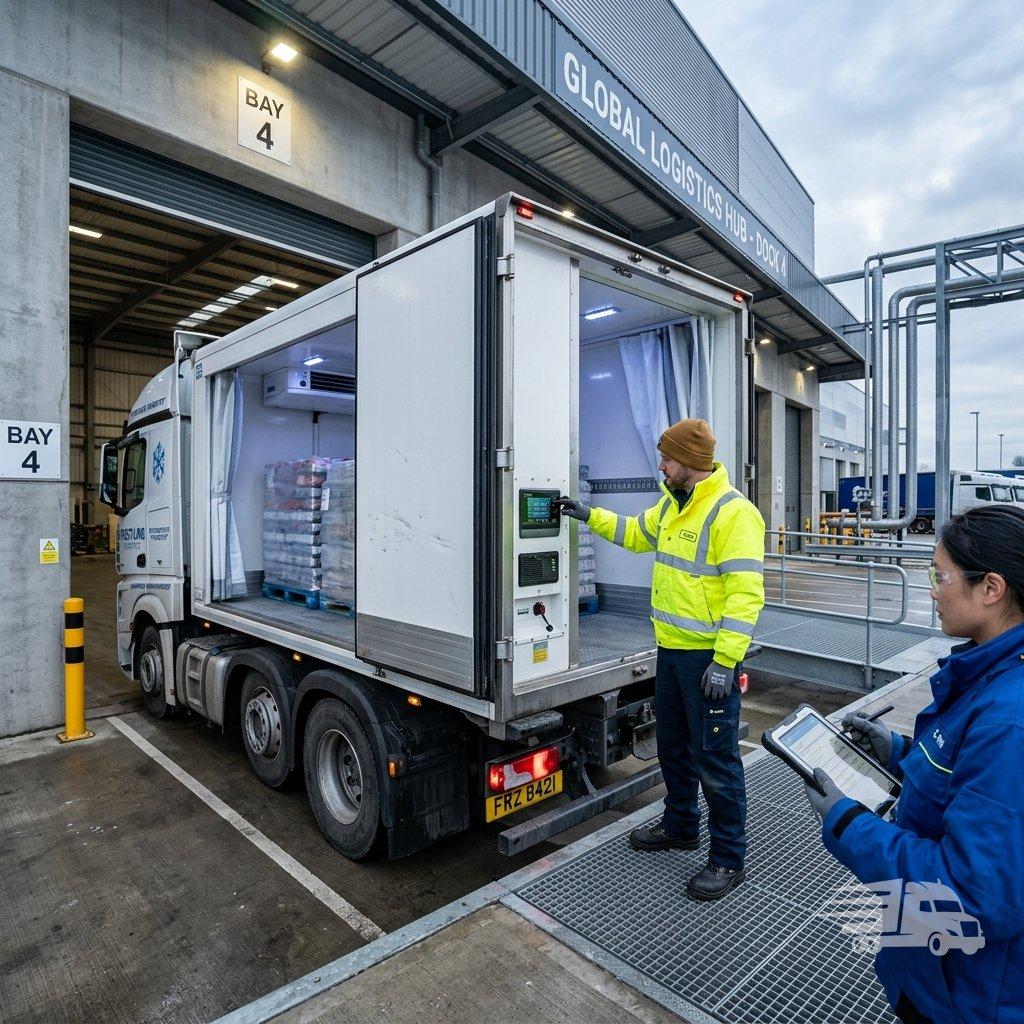
Transporting perishable goods — food products, deep-frozen cargo, fresh flowers, vaccines, and pharmaceuticals — requires strict temperature control at every stage of delivery. This unbroken system is known as the cold chain. Any failure in refrigeration unit (TRU) performance leads to cargo spoilage and significant financial losses for both the carrier and the client.
Europe's cold chain spans temperature-controlled production sites, cross-docking, long-haul and urban transport, and specialised warehouses. It is governed by a blend of international and EU regulations: the ATP Agreement defines performance classes for insulated and refrigerated road equipment; EU food hygiene law (Regulation EC 852/2004) requires HACCP-based controls; and pharmaceutical distribution is governed by EU Good Distribution Practice (GDP) guidelines.
Core Requirements for Refrigerated Transport
Refrigerated logistics differs significantly from standard curtainsider operations:
Vehicle technical condition: The walls of a refrigerated semi-trailer must meet ATP-certified insulation standards. The transport refrigeration unit (TRU) must undergo regular servicing and sensor calibration. EU GDP guidelines require that monitoring equipment be calibrated against traceable standards to ±0.3°C accuracy, with calibration records retained for audit.
Sanitary control: Before each loading, the trailer body must be sanitised. For food transport, documented HACCP procedures embedded in a Food Safety Management System (FSMS) are mandatory under EC 852/2004. For pharmaceutical transport, the driver and operator must comply with GDP requirements covering vehicle qualification and cleaning records.
Temperature monitoring and documentation: Accurate, timestamped logs of temperature conditions throughout the entire journey are legally required. From January 2026, enforcement of temperature tracking requirements has intensified: records must cover every node — loading, transit, cross-docking, and unloading — and be retained for a minimum of two years.
Modern Temperature Control Technologies in 2026
A passive paper-roll thermograph is no longer sufficient in 2026. Shippers and regulatory authorities now require real-time temperature and humidity monitoring via IoT sensors throughout the entire transit.
Real-time monitoring is now the standard expectation in regulated cold chains across Europe. GDP requires validated, calibrated monitoring with tamper-proof digital records; HACCP guidance mandates documented procedures embedded in an FSMS. Modern deployments increasingly use IoT sensors, telematics, and AI for anomaly detection, predictive maintenance of refrigeration assets, and dynamic routing that protects temperature while cutting energy consumption.
Pharmaceutical cold chain operations represent one of the fastest-growing segments: for biological products and vaccines, a single temperature excursion can render an entire shipment unusable, with cargo losses potentially reaching hundreds of thousands of euros. For these loads, continuous electronic monitoring with immediate alert functionality is not optional — it is a compliance requirement under EU GDP and WHO Model Guidance for Cold Chain Storage.
CarGoPro users have access to integrated solutions: when assigning a vehicle to a trip via the fleet management system, the driver can transmit not only their GPS location via real-time tracking but also upload photos of temperature sensor readings via the Telegram bot at each loading and unloading stage. This creates a documented, timestamped evidence trail that minimises disputes at cargo handover.
What to Do When Refrigeration Equipment Fails
If temperature starts rising during transit:
The driver must immediately notify the dispatcher and the cargo owner.
Activate the backup generator or attempt to isolate the fault.
Record the exact time of failure and current sensor readings.
To minimise the impact of force majeure situations, the driver can use the SOS button in the active trip in our Telegram bot, which instantly notifies the cargo owner so they can decide on transhipment or rerouting to an alternative unloading point.