


How to accurately calculate the cost per trip. Accounting secrets for transport companies: tracking fuel consumption, fleet depreciation, and hidden costs.
In-Depth Accounting in Logistics 2026: Managing Fleet Fuel and Depreciation
The profit margins of the transport business in Europe and Ukraine remain under immense pressure. Rising taxes, high leasing interest rates, and constant fluctuations in energy prices make cost management a matter of survival. By 2026, accounting in a transport company has evolved from simply balancing the books at month's end to predictive analytics, where granular control of fuel costs and dynamic calculation of depreciation play a key role.
Logistics automation
Abandoning Norms in Favor of Telematics
The traditional approach, where a company wrote off fuel according to "summer" and "winter" norms per 100 km driven, is considered financial suicide today. Real consumption of diesel or electricity depends on dozens of variables: gross cargo weight, terrain (crossing the Alps versus driving across flat Poland), road surface quality, headwind strength, and most importantly, the specific driver's driving style.
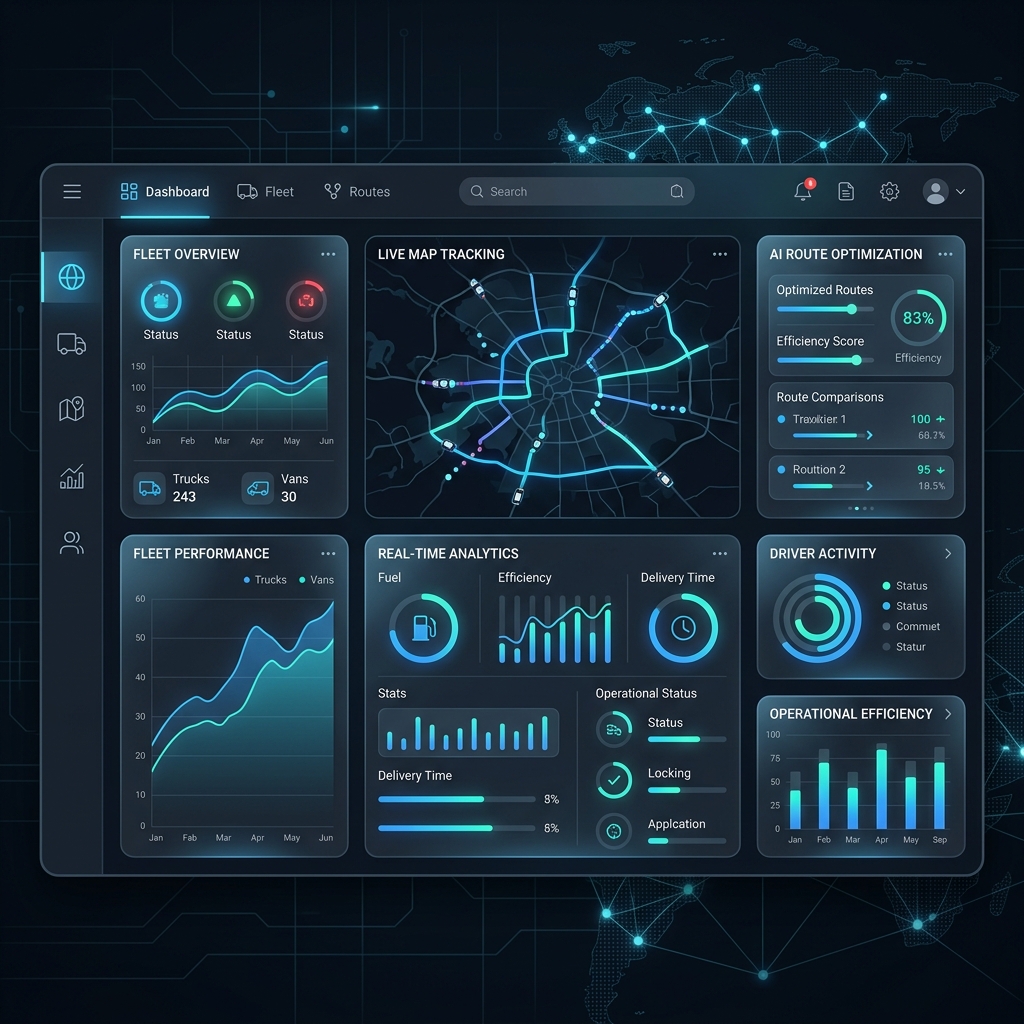
Modern ERP systems, tightly integrated with the truck's onboard computers (via the CAN bus), read fuel consumption data every second. The system automatically analyzes Eco-driving parameters: how often the driver applies harsh braking, whether they use cruise control, and what percentage of time the engine idles while parked. Based on this data, individual driver rankings are formed. Forward-thinking companies have completely abandoned fixed per-kilometer pay rates, introducing a bonus system where a driver receives up to 50% of the value of the fuel they saved.
Dynamic Depreciation and Predictive Maintenance
The write-off of the value of a tractor and semi-trailer (depreciation) was traditionally calculated using the straight-line method—in equal installments over 5 or 7 years. However, this approach does not reflect the actual wear and tear of the equipment. In 2026, CFOs of logistics companies use dynamic (mileage-based) depreciation. If a truck drives 15,000 km in a month, the depreciation amount will be three times higher than if it had driven 5,000 km.
Moreover, Artificial Intelligence is being integrated into maintenance management systems (Predictive Maintenance). By analyzing historical breakdown data and telemetry metrics such as vibration, oil temperature, and brake pad pressure, the system can predict the failure of a turbine or clutch weeks before it happens on the highway. This allows preventive repairs to be carried out at the home base, which costs the company 5 to 7 times less than an emergency tow and repair at a workshop in Western Europe.
Unit Economics: The Profitability of Every Trip
The goal of this profound accounting is to calculate accurate Unit Economics for every single trip, vehicle, and driver. A modern TMS (Transport Management System) must show the dispatcher the expected margin in real time, even before an order is signed. The system factors in the cost of empty mileage to the loading point, road tolls (which vary depending on the truck's emission class), projected fuel costs, crew wages, and depreciation.
Only this kind of financial micro-management allows transport companies to identify loss-making contracts, decline business from unprofitable clients, and optimize their fleet, ensuring a stable profit even in the fiercely competitive environment of 2026.